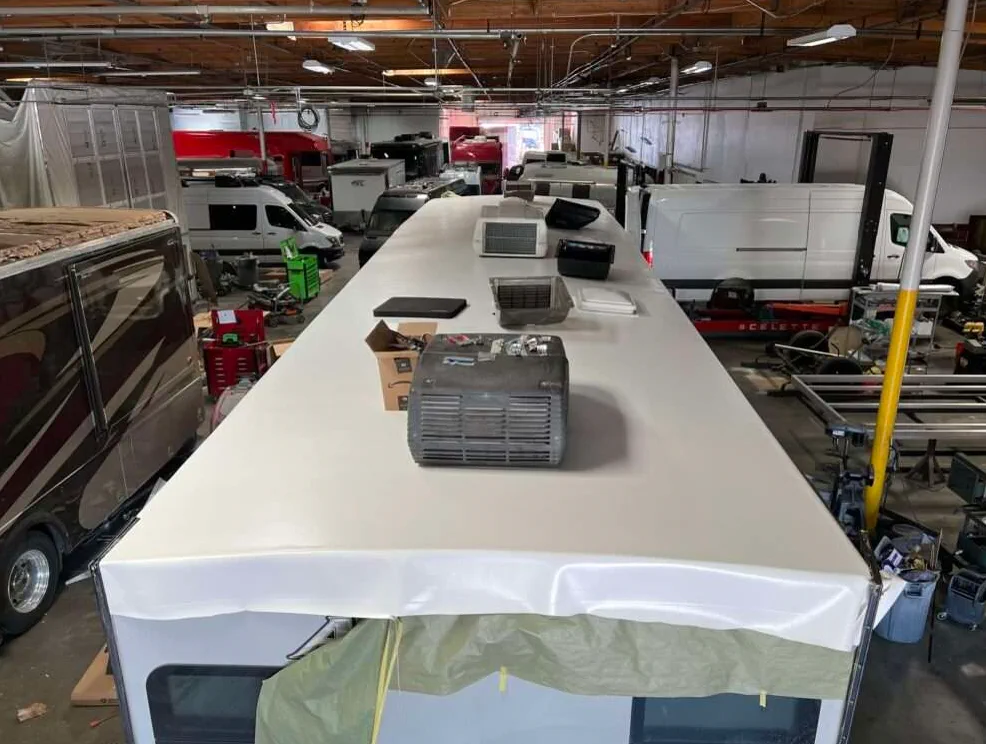
Miami RV roofs need lap sealant inspection every 12 months and full recoat every 18-24 months. Miami UV index above 9 for 8 months per year degrades sealant 3-4x faster than national averages. A $250-450 reseal prevents a $1,500-6,000 subfloor repair. Annual inspection at your location: $75-125.
Why Miami Is Different From Every Other Market
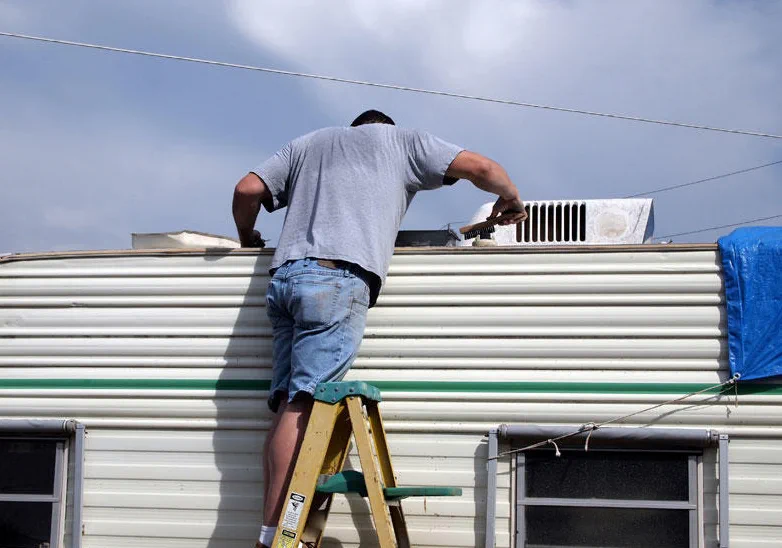
Every RV manufacturer's roof maintenance guide assumes you are operating in a climate where the UV index is 6-7 on average and annual rainfall is 30-40 inches. Those numbers describe most of the United States. They do not describe Miami-Dade County.
Miami has a UV index above 9 from April through November - eight months per year. The standard Dicor polyurethane lap sealant used on virtually all RV roofs undergoes photochemical degradation under UV exposure that breaks the molecular polymer chains and eliminates the material's elasticity. In a northern market, this process takes 4-6 years. In Miami, it takes 18-24 months. The sealant looks intact from the ground. Up close on the roof, it is cracked and lifting at every penetration point.
Miami also receives over 60 inches of rain per year, concentrated in daily afternoon thunderstorms from June through September. These storms are not gentle. They deliver 1-2 inches of rain in 20-30 minutes at high velocity. Water drives through any opening in the roof sealant at high pressure during these events, then disperses inside the wall or floor assembly over the following days. The combination of rapid UV degradation and high-intensity rain events is unique to South Florida and creates a roof maintenance requirement that has no equivalent in any other major US metro.
What to Look For: A 12-Point Roof Inspection
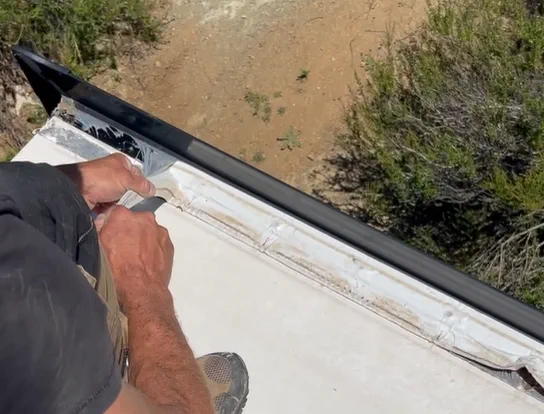
A proper Miami RV roof inspection covers these 12 points. You can do the visual portion yourself with safe roof access. The moisture meter readings require a calibrated device and experience interpreting the numbers.
- Front cap seam - where the roof membrane meets the front fiberglass cap. This seam is the highest-priority inspection point on most RVs. It sees maximum sun exposure and maximum thermal expansion cycling.
- Each rooftop AC unit base - the rubber gasket under the unit and the Dicor bead around the perimeter. Check for compression loss in the gasket (unit rocks slightly when pushed) and for cracks in the sealant bead.
- Each roof vent base - the plastic frame where the vent body meets the roof membrane. Plastic-to-membrane transitions are a common failure point as the plastic shrinks and expands at a different rate than the membrane.
- Antenna bases and cable entries - typically 2-4 points on most RVs. Small diameter penetrations that are easy to miss on inspection.
- Roof membrane condition overall - walk the roof (carefully, using designated walk areas if marked) and look for surface crazing (fine cracks in the EPDM or TPO surface), bubbling, or soft spots underfoot.
- Front overhang edge - the transition between the roof surface and the front vertical face of the coach. Water runs off the roof front and can enter here if the edge seal has failed.
- Rear cap transition - same issue at the rear of the coach.
- Sidewall-to-roof transitions - the caulk bead along the top edge of each sidewall panel where it meets the roof. On fiberglass-sided coaches, this is often done in a different material than the lap sealant and needs its own inspection.
- Ceiling moisture meter readings - inside the RV, press a calibrated moisture meter to the ceiling directly below each roof penetration point. Any reading above 15-20 percent indicates active or recent water intrusion that is not yet visible as a stain.
- Floor moisture around slide-out perimeters - slide-out roof seals fail at the slide-out corners where the sliding roof meets the main roof structure. Press on the floor adjacent to the slide-out opening.
- Window and door surrounds - water can also enter around window frames and door frames if the exterior sealant has separated from the body.
- Bathroom and kitchen roof penetrations - the plumbing stack vent and any kitchen hood exhaust penetration are often overlooked.
How Often Should You Reseal in Miami?
The correct answer for Miami-Dade: visual inspection every 12 months, full lap sealant recoat every 18-24 months.
The manufacturer recommendation of every 3-5 years assumes a climate where UV exposure is roughly half of what Miami receives. Following the manufacturer schedule in Miami means you are almost certainly driving a rig with cracked or failed sealant at multiple penetration points by year 3. We confirm this on roughly 65 percent of pre-purchase inspections - rigs that the seller describes as "well-maintained" but have never been on the correct Miami maintenance schedule.
The 18-24 month reseal interval sounds aggressive but is not expensive: a full perimeter reseal on a 35-foot coach is $250-450, completed in 2-4 hours at your location. That is $125-225 per year in maintenance cost versus the risk of a water-damaged wall or floor that starts at $600 and goes up to $6,000 depending on extent.
The Cost Math: Prevention vs. Repair
| Maintenance (Annual) | Cost | Repair If Skipped | Repair Cost |
|---|---|---|---|
| Lap sealant recoat | $250-450 | Subfloor replacement | $1,500-6,000 |
| Roof inspection | $75-125 | Wall delamination repair | $300-800 |
| Vent replacement (proactive) | $85-175 | Ceiling liner replacement | $280-600 |
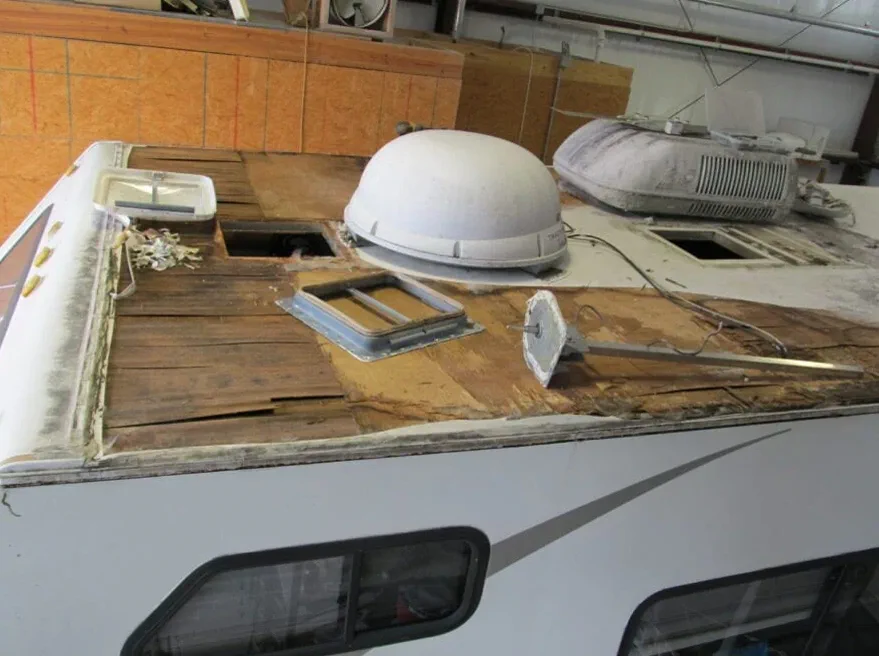
The math is straightforward. A 5-year history of proper Miami maintenance (roof inspection and reseal each year) costs approximately $1,500-2,800 depending on conditions found. A 5-year history of deferred maintenance results in the conditions we find most often on older Miami-Dade RVs that come to us for pre-sale inspection: active subfloor damage, wall delamination in 2-3 locations, and ceiling damage from the same water source that went unaddressed for multiple seasons.
Can You Do It Yourself, or Do You Need a Pro?
The short answer: the materials are available at RV parts stores, but the technique matters and mistakes are common among DIYers.
The most common DIY mistakes we see on Miami roofs: applying Dicor self-leveling to a surface that was not properly primed (Dicor requires RP-LP or RP-LWRP primer on EPDM before application - the sealant will not bond correctly without it). Applying new sealant over old without removing the cracked material first (new sealant over degraded sealant fails within one rainy season because the bond is only as strong as the substrate). Using an incompatible sealant on a TPO roof (TPO requires TPO-compatible sealants - Dicor EPDM sealant will not adhere correctly to TPO and will peel within months).
If you are comfortable on the roof and willing to do the prep work correctly, basic penetration resealing is a DIY-accessible repair with the right products. We recommend calling us for anything involving: a suspected active leak (where the source needs tracing), moisture meter assessment, or any sealant application covering more than 4-5 penetrations (at that scale, professional service is often lower all-in cost given the time involved).
RV Roof Maintenance Miami Guide - Common Questions
How often should I reseal my RV roof in Miami?
Every 18-24 months for a full perimeter reseal. Annual visual inspection. Miami UV degrades lap sealant 3-4x faster than the manufacturer's recommended service intervals assume.
What does RV roof resealing cost in Miami?
Full perimeter lap sealant recoat: $250-450 for a typical 30-40 foot RV. Individual penetrations: $35-65 each. Inspection: $75-125, credited toward same-day repair. All at your Miami-Dade location. Call (305) 912-8800.
Can I use any caulk on my RV roof?
No. EPDM roofs require Dicor self-leveling with RP-LP primer. TPO roofs need TPO-compatible sealants. Using the wrong product causes adhesion failure within one rainy season. Standard hardware store caulk is not compatible with RV roof membranes.
How do I know if my roof is leaking if I don't see stains?
Use a moisture meter at the ceiling below each roof penetration. Readings above 15-20% indicate active or recent water intrusion before it becomes visible. Professional inspections include this. A cracked vent base can drive a slow leak for months before interior staining appears.
What is the most common roof failure on Miami RVs?
Lap sealant failure at roof penetrations - vents, AC bases, antennas, and the front cap seam. Miami UV chemically degrades the polyurethane sealant until it loses elasticity and cracks. Annual inspection catches this before water intrusion begins.
Should I get a roof inspection before a Florida Keys trip?
Yes. A failed roof sealant on the Overseas Highway has no repair options until you return to the mainland. Pre-trip roof inspection at your Homestead or Miami-Dade location: $75-125. Call (305) 912-8800.